How to Choose a Metal Fabricator in Metro Vancouver
Choosing a metal fabricator in Vancouver: CWB certification, shop drawings, permit experience, finish systems, and the red flags to catch before signing.
Most people pick a fabricator from Google or a neighbour's referral. Here is what to actually look at before you sign anything.
Most people pick a metal fabricator from a Google search or a neighbour’s referral. Neither method tells you much about whether the shop is licensed for structural work, insured for on-site injuries, or organized enough to produce drawings before steel is ordered. This guide gives you the questions to ask before you commit.
The credential that separates structural from decorative work
1. Are they CWB certified?
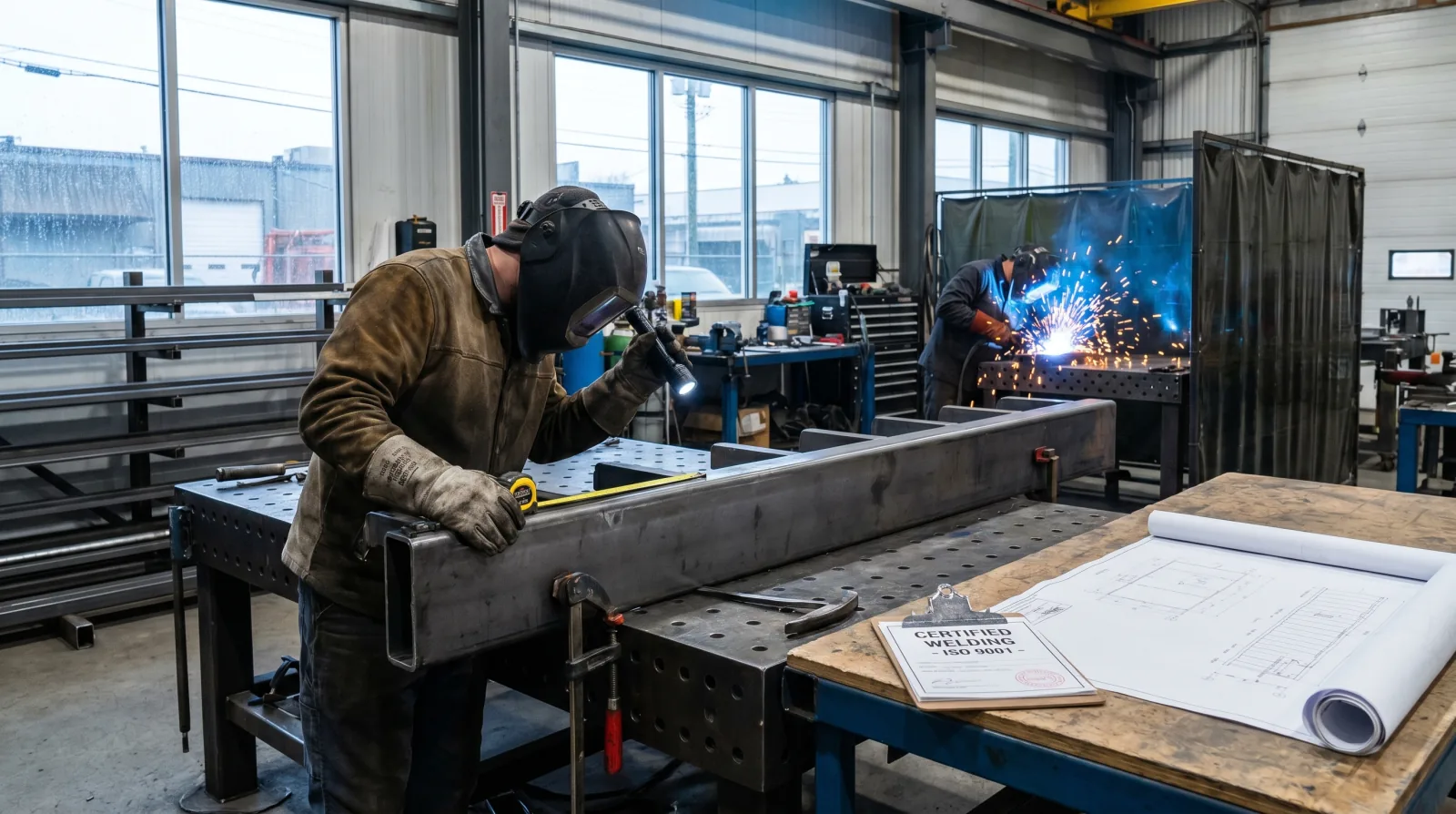
The Canadian Welding Bureau (CWB) certifies fabricating companies under CSA W47.1 (structural steel welding) and CSA W47.2 (structural aluminum welding). Certification means the shop’s welding procedures have been tested, their welders have been qualified, and they submit to audits. It is the standard that municipalities, engineers, and building inspectors reference when assessing whether structural welds are acceptable.
For stairs, guards, connection plates, and anything anchored into the structure of a building, CWB certification is the baseline credential. A decorative gate or a small furniture piece may not need it. A steel stringer carrying 100 kg of live load anchored into a concrete landing does.
Not every shop that lists “custom metal fabrication” on their website holds current CWB certification. Verify directly on the CWB Group’s online registry. The entry shows the company name, certification scope, and expiry date. For more on what the certification means for stair and railing work, the CWB certified welding page covers the scope in more detail.
2. Do they carry WCB coverage and liability insurance?
WorkSafeBC (WCB) coverage protects you as the property owner if a worker is injured on your site during delivery or installation. Without active coverage on the contractor, that liability can fall to you. Ask for the contractor’s WCB clearance letter, and verify it directly with WorkSafeBC before installation begins, not before the quote is accepted. Clearance letters are time-sensitive and a letter that was current in January may not be current in April.
Liability insurance covers property damage during fabrication, delivery, and installation. A standard requirement for commercial work is $2 million per occurrence. For residential work, ask for the certificate of insurance and note the expiry date and the insured amounts. A shop that hesitates to provide either document is not a shop that should be working on your property.
Documentation and planning questions
3. Can they handle the permit and engineering, or do you have to arrange that yourself?
This is one of the most common points of confusion in residential metalwork projects. Some fabricators manage the full process, they coordinate with a structural engineer, prepare the permit application, and handle AHJ (authority having jurisdiction) submissions. Others fabricate only and expect you to arrive with a stamped engineer’s drawing and a permit already in hand.
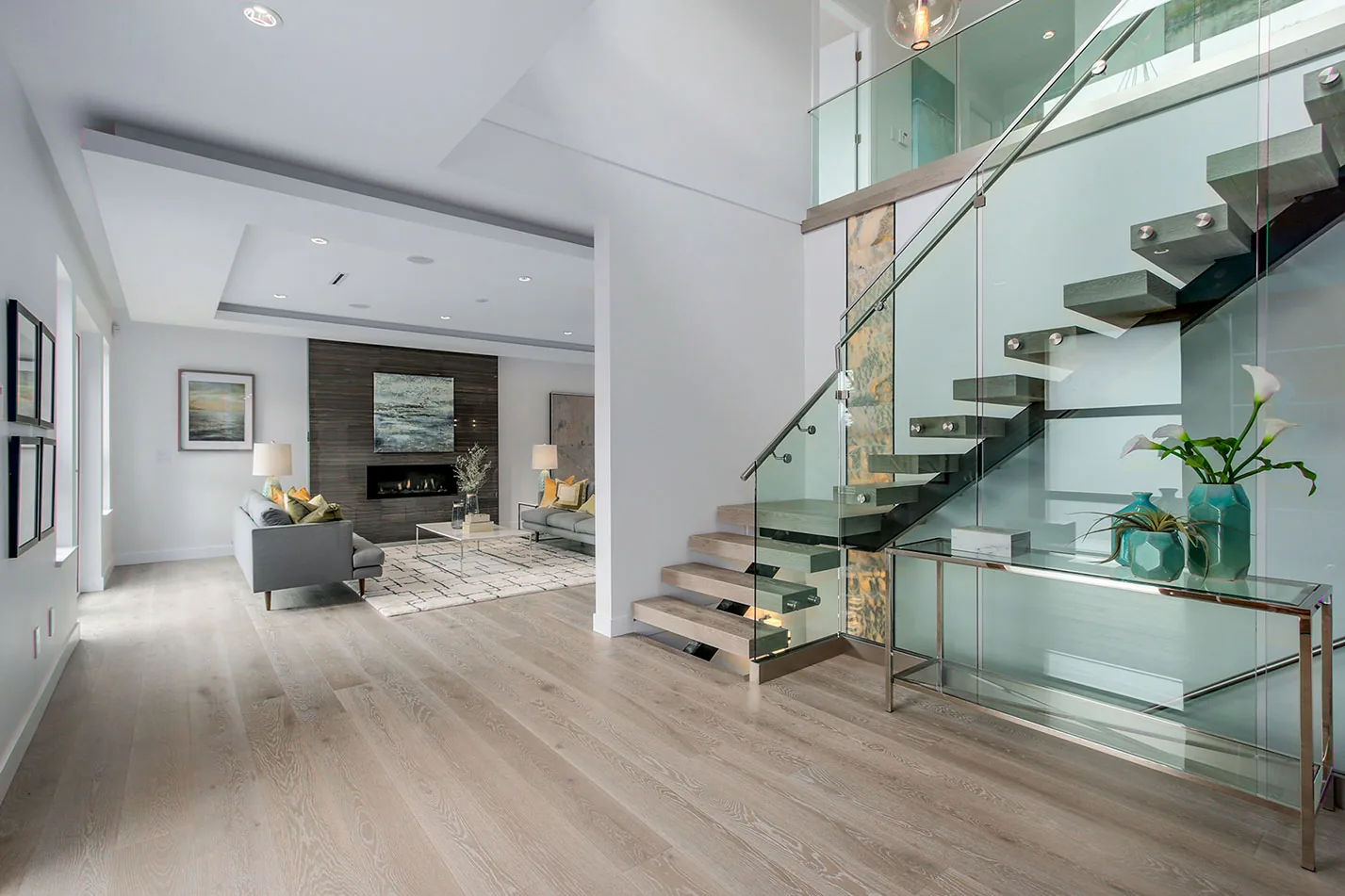
For custom metal stairs, particularly mono stringer, cantilevered, and floating designs, a structural engineer’s drawing is typically required before the City of Vancouver or any Metro Vancouver municipality will issue a building permit. If your fabricator does not handle this coordination, you need to arrange it separately, and the engineering review timeline adds to the overall project schedule. Ask explicitly: who prepares the permit application, who coordinates the engineer, and what happens if the AHJ asks for revisions?
The staircase replacement permit guide covers the Vancouver-specific permit process and common timeline expectations.
4. Do they produce shop drawings before fabrication?
Shop drawings are scale drawings of the parts being fabricated, dimensions, connection details, weld symbols, material callouts, and finish notes. They are produced after the design is confirmed and before steel is ordered. If a structural engineer is involved, they review and stamp the shop drawings before fabrication starts. This is not a formality. It is the step where errors in geometry, connection size, or finish specification are caught on paper rather than in steel.
A fabricator who does not produce shop drawings is working from a sketch, a verbal description, or nothing. Any discrepancy between what you expected and what arrives on site, a stringer that is 50 mm too long, a connection plate in the wrong location, a beam profile that is heavier than specified, is resolved in the field, usually at your cost and on your schedule.
Ask to see a sample shop drawing from a recent similar project. A competent shop produces them as a matter of routine. For a closer look at what a full shop drawing set includes, the shop drawings process page walks through each element. This article is not a substitute for review by a licensed engineer or the authority having jurisdiction.
5. What is their fabrication lead time, and what can delay it?
Lead time in the current Metro Vancouver market depends on shop backlog, the complexity of the finish system, engineering review timing, and whether a building permit is in the critical path. In most residential projects, fabrication runs four to eight weeks from shop drawing approval, confirm with a current quote, not a general range on a website.
The factors that most often extend the schedule beyond the initial estimate: permit approval taking longer than expected, engineering revisions after the shop drawing is submitted, a finish specification that requires a longer cure time or a specialty coating, and material availability for specific steel sections. Ask what has caused delays on similar recent projects and how those were managed.
Scope and accountability questions
6. Do they subcontract any of the work, and to whom?
Subcontracting is common and not inherently a problem. Many fabricators have long-standing relationships with installation crews, finishing shops, and engineers they use routinely. The issue is when the fabricator does not know who will actually be on your site, or when the subcontractor is not covered by WCB and the fabricator has not verified it.
Ask specifically: who installs the work, have they worked with this crew before, and does the subcontractor carry their own WCB and liability coverage? If the fabricator handles engineering and permitting through a referral relationship rather than in-house, ask who the engineer is and whether they have stamped similar work in your municipality before.
7. What finish system do they use, and how long does it last in Vancouver’s climate?
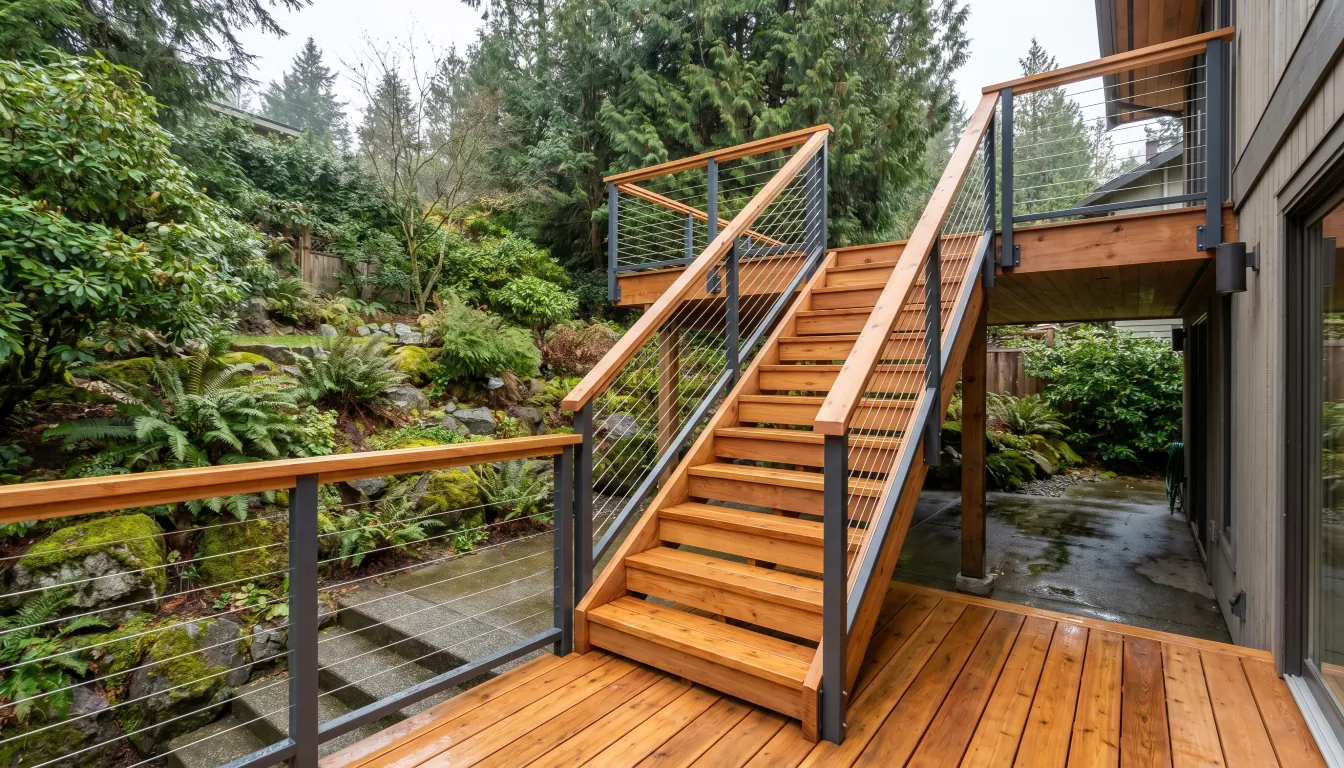
Vancouver’s wet coastal climate is hard on exterior metalwork. Rain, salt air from nearby ocean exposure, and seasonal freeze-thaw cycles all accelerate corrosion in improperly finished steel. The finish question matters more for exterior stairs, deck railings, and gates, but even interior metalwork in damp locations (parking structures, covered exterior stairs) needs appropriate protection.
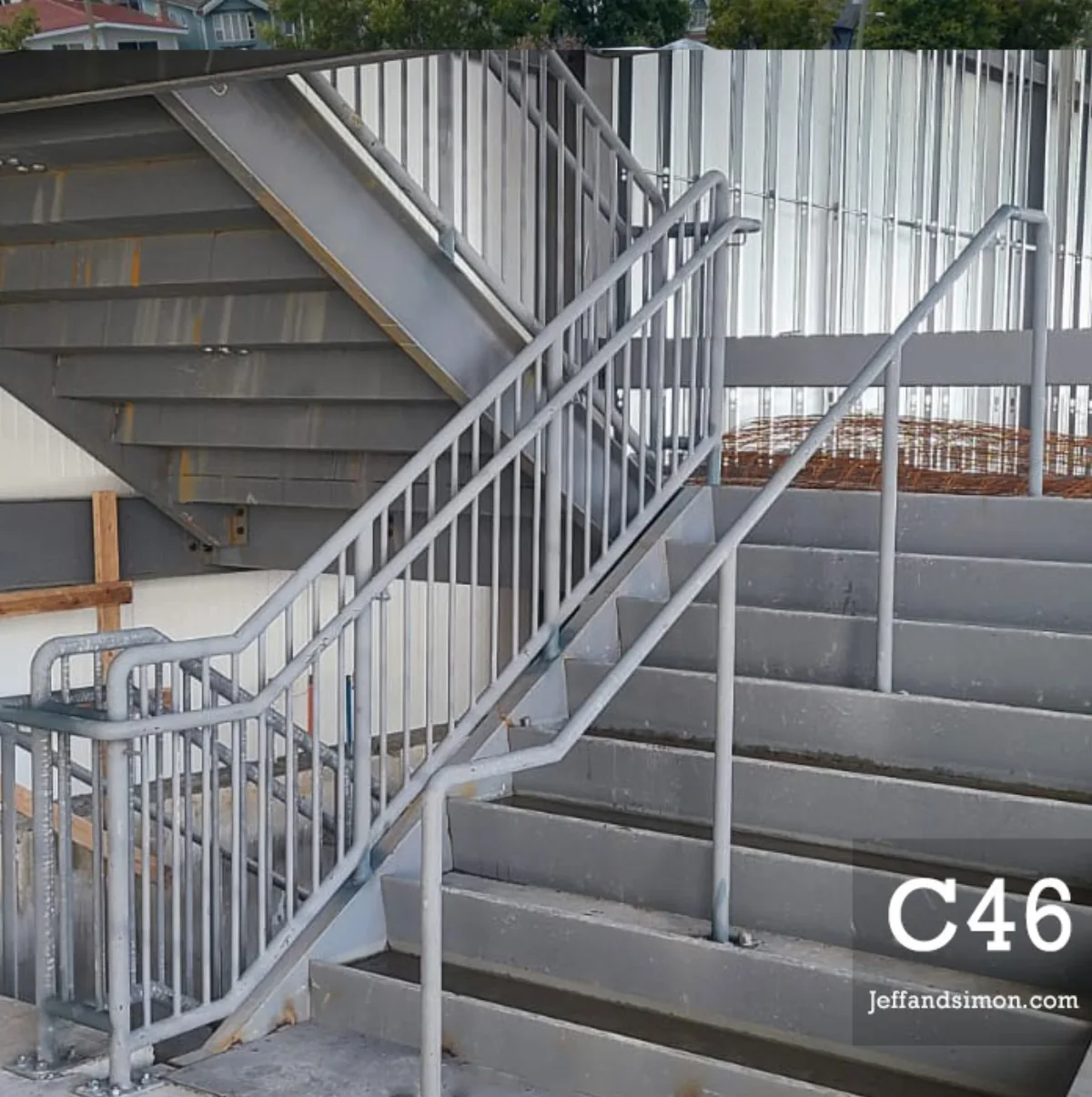
For interior residential stairs, a two-coat powder coat system, zinc phosphate primer plus architectural topcoat, is the standard. For exterior stairs and railings, the minimum is a two-coat industrial system using epoxy primer and a urethane or polyurethane topcoat, which provides better moisture and UV resistance than standard architectural powder coat. For fully exposed exterior conditions, particularly on the North Shore and waterfront properties, hot-dip galvanizing after fabrication provides the most durable base protection. Duplex coating, which combines galvanizing and powder coat, is the most durable option for exposed exterior steel and also allows colour specification.
Ask what primer system they use, whether the finish is applied in-house or at a finishing shop, and what warranty or expected lifespan they attach to the coating. A fabricator who cannot describe their primer by name is probably buying whatever is on sale.
8. Can they provide references from recent similar projects?
References should be recent, within the last twelve months, and from projects similar in type and complexity to yours. A residential floating stair project is different from a commercial egress stair or a decorative gate, and references from dissimilar work tell you less than you might expect.
When you contact a reference, ask: did the project come in close to the quoted price, did the schedule hold, were shop drawings produced and were they easy to review, and was the installation crew professional and careful with the finished site? A shop that hesitates to provide references, or provides contacts that turn out to be unavailable, should be treated as a warning sign.
Quote and installation questions
9. What does the quote include, and exclude?
A metal fabrication quote should state clearly what it covers. Common inclusions: fabrication of steel components as specified, shop primer, touch-up paint for installation damage, and installation. Common exclusions, and sources of budget surprises, include structural engineering, building permit fees, finished tread materials (wood, stone, or concrete supplied and installed by others), top coat painting by a separate trade after installation, site access equipment (scaffolding, crane, scissor lift), and travel or parking for out-of-region sites.
The exclusions list matters more than the total price. A low quote with no exclusions may exclude things you assumed were included. Comparing quotes from different shops is only useful when you know what each one covers.
The guide to reading a metal fabrication quote breaks down each line item in more detail and explains the most common sources of scope confusion between homeowners and fabricators.
10. Do they do the installation themselves, or subcontract it?
Installation quality matters as much as fabrication quality. A well-fabricated stringer installed out of plumb, with connection plates bolted into the wrong blocking location, or with welds ground unevenly at visible joints, still fails. Ask whether the shop’s own staff do the installation or whether it is handed to a separate crew.
When a fabricator does their own installation, the accountability is clear, the same people who built it show up to install it, and they know the tolerances and the details. When installation is subcontracted, ask whether the fabricator supervises the work and remains the single point of contact for any deficiency.
Red flags to watch for
A fabricator without CWB certification for structural work cannot demonstrate that their welds meet the standard a building inspector or engineer requires. Walk away from any quote for structural metalwork, stairs, guards, structural connections, that does not come from a CWB-certified shop.
A quote with no exclusions list is not a complete quote. It means the fabricator has not thought through the full scope, or they are pricing low with the expectation of adding costs later. Ask for the exclusions in writing before signing anything.
No shop drawings offered means fabrication will start from a verbal or sketch-level description. Errors are found in steel, not on paper. This adds cost and schedule risk to every project.
No references provided, or references that cannot be contacted, is a sign that recent clients are not enthusiastic advocates. In a market where good fabricators have strong repeat and referral business, a shop that cannot produce a reference list should raise questions.
Pressure to sign before drawings are reviewed is the most serious flag. If a fabricator wants a deposit or a signed contract before shop drawings are produced and reviewed, they are asking you to commit to a scope that has not been defined. Drawings and deposit should move in the same direction, not in opposite order.
The practical next step
Send photos, floor-to-floor dimensions, and the project address to fabricators you are considering. Even rough information allows a good shop to separate a simple fabrication scope from one that needs engineering or a permit conversation first. The shops that respond with specific questions about your site are usually the ones that have thought through the work before they price it.
Vancouver Stairs is CWB certified, carries full WCB and liability coverage, produces shop drawings on every structural project, and handles permit coordination in-house. If you have a stair or railing project in Metro Vancouver, that is where to start.
Sources
- Canadian Welding Bureau, Company Certification Registry
- CSA W47.1, Certification of Companies for Fusion Welding of Steel
- WorkSafeBC, Clearance Letter Information for Contractors and Homeowners
- BC Building Code 2018 Division B Section 9.8, Stairs, Ramps, Landings, Handrails and Guards
- Engineers and Geoscientists BC, Professional Engineer Designation
Related questions
What is CWB certification and why does it matter?
CWB stands for Canadian Welding Bureau. CWB certification means the shop's welding procedures and welders have been tested and audited against CSA W47.1 or W47.2 standards. For structural work, stairs, guards, connection plates anchored into buildings, it is the baseline credential. Without it, the fabricator cannot demonstrate that their welds meet the standard a building inspector or engineer expects.
Is CWB certification required by law in BC?
It depends on the project type and the building permit. For structural welding in Part 3 buildings (commercial, multi-family), municipal plan checkers typically require CWB-certified fabricators as part of the permit submission. For residential work, it is not always mandated by the permit process, but a structural engineer reviewing the connection details will usually specify it anyway.
What does WCB coverage actually protect me from?
WCB (WorkSafeBC) coverage protects you as the property owner if a worker is injured on your site during the installation. Without active WCB coverage on the contractor, you can be held liable for those injury costs. Always verify with WorkSafeBC directly, do not accept a certificate that may be expired.
What are shop drawings and why should I care about them?
Shop drawings are scale drawings of the actual fabricated parts, dimensions, connection details, weld symbols, finish notes. They are produced before steel is ordered, reviewed by the engineer if required, and used by the fabricator to build exactly what was designed. Without shop drawings, the fabricator is working from memory or a rough sketch. Errors caught on a shop drawing cost nothing to fix; errors caught in fabricated steel cost hundreds to thousands of dollars.
Do I need to hire an engineer separately, or does the fabricator handle that?
It depends on the fabricator. Some handle engineering coordination in-house; others expect you to supply a stamped drawing before they quote. For custom metal stairs, especially mono stringer, cantilevered, or floating designs, a structural engineer's drawing is typically required before a building permit is issued. Ask upfront whether the fabricator manages the engineering relationship or whether that is your responsibility.
What finish should I specify for an exterior stair in Vancouver?
Vancouver's wet coastal climate is hard on paint-only finishes. For exterior stairs, the minimum is a two-coat industrial system, epoxy primer plus urethane topcoat. Hot-dip galvanizing is better for fully exposed conditions. Duplex coating (galvanize then powder coat) is the most durable option and the one most frequently specified on North Shore and waterfront exterior stairs.
How long should fabrication take for a residential stair?
Lead time depends on shop backlog, finish type, engineering review, and whether permit approval is in the critical path. In most residential projects, fabrication runs four to eight weeks from shop drawing approval. Permit review can add weeks before that clock even starts. Confirm current lead time with a specific quote, not a general estimate from a website.
What should a metal fabrication quote include?
At minimum: fabrication of specified steel components, primer coat, touch-up paint for installation damage, delivery to site, and installation. Common exclusions that create surprises: engineering, permit fees, finished tread materials (wood, stone), painting by others after installation, and site access equipment like crane or lift. Ask for the exclusions list, not just the total.
Is it a problem if the fabricator subcontracts installation?
Not necessarily, but you should know who is doing it. If the fabricator subcontracts installation to a crew they work with regularly, and that crew is covered by WCB and carries liability, it can work well. The risk is when the fabricator hands the job to a day-labour crew they do not know, with no WCB verification and no accountability if something goes wrong.
What red flags should I watch for when getting quotes?
No CWB certification for structural work. A quote with no exclusions list. No mention of shop drawings. No references from recent comparable projects. Pressure to sign before drawings are reviewed. These are not negotiating tactics, they are signs of a shop that is not set up to manage structural metalwork at the level a building inspector or engineer expects.