Wrought Iron Railing Cost Per Linear Foot in Vancouver 2026
What homeowners call wrought iron is almost always ornamental mild steel. Here is what it costs, what drives the number, and when it makes sense in Metro Vancouver.
Most 'wrought iron' railings fabricated today are mild steel with ornamental profiles. Here is the cost reality and when the style makes sense for Vancouver heritage homes.
When a homeowner in Shaughnessy asks for a wrought iron railing, they almost always mean ornamental mild steel. The distinction matters, because the two materials are fabricated differently, priced differently, and perform differently, and knowing which one you are actually getting shapes every decision that follows.
What “wrought iron” means today
True wrought iron is a specific material: low-carbon iron with slag fibres worked through it, forged by hand at high heat. It has a fibrous, almost grain-like structure, is more corrosion-resistant than plain steel, and is exceptionally workable. It was the dominant material for decorative metalwork through the 19th century and into the early 20th. You will find it in the railings of pre-war heritage buildings, in ornate balusters on older Edwardian homes in Dunbar and Kerrisdale, and occasionally in the scroll-work on century-old front stoops in Strathcona.
Almost no fabricator produces true wrought iron today. The material is not commercially stocked in Canada, and the forging tradition that shaped it requires specialist skills that are genuinely rare. What is sold and fabricated under the name “wrought iron” is mild steel, typically square or round bar stock, bent or welded into traditional scroll and picket profiles, then coated to match the dark satin finish people associate with the term.
The result looks similar. The texture is different. The corrosion performance is slightly worse. And the cost of producing it in a modern shop is largely driven by fabrication labour rather than material, which is why complexity matters more than tonnage when a fabricator prices ornamental railing work.
The installed cost range
Ornamental steel railing, the scroll-work, traditional-picket, or basket-design railing that most people call wrought iron, runs across a wide range in Metro Vancouver depending on the scope and the complexity of the pattern.
Simple straight picket railing, where square bar pickets are welded at uniform spacing to a top and bottom rail, is the least expensive version of the traditional look. The fabrication is predictable, the labour is efficient, and the finish system is standard.
Decorative scroll work changes that equation. Hand-bent or CNC plasma-cut scrolls, rosettes, collars, and basket inserts take more material and significantly more fabrication time. A pattern with a C-scroll at the mid-point of every other bay costs more than a plain picket pattern of identical dimensions, even though the steel bar weight is similar. The labour is in the forming and the welding.
The other variable is the finish. Interior ornamental steel typically receives a two-coat powder coat system, a zinc phosphate primer followed by a top coat. Exterior ornamental steel in Metro Vancouver’s climate needs more: a high-build epoxy or zinc-rich primer before the top coat, or in fully exposed conditions, hot-dip galvanizing under the powder coat. That finish work adds cost to exterior railings, and it should.
Access conditions affect installation cost. A front stoop railing on a flat site with easy truck access is straightforward to install. A similar railing on the side yard of a house in Dunbar with a 36-inch gate, a sloped garden path, and finished wood floors on the landing is not. The steel is the same; the installation conditions are not.
When ornamental steel style makes sense
The style is well-matched to specific contexts in Metro Vancouver:
Heritage homes in Shaughnessy, Kerrisdale, Dunbar, and the older residential streets of East Vancouver often have existing ornamental metalwork, front railings, stoop guards, interior balusters, that was original to the building or added during mid-century renovations. When that existing railing needs replacement or extension, matching the ornamental style keeps the home coherent. A cable railing or frameless glass panel would be technically compliant but visually incongruous on a 1920s Craftsman.
Older West End buildings, Strathcona heritage properties, and the Edwardian streetscapes along Commercial Drive have the same situation: a traditional aesthetic that modern railing systems fight rather than support.
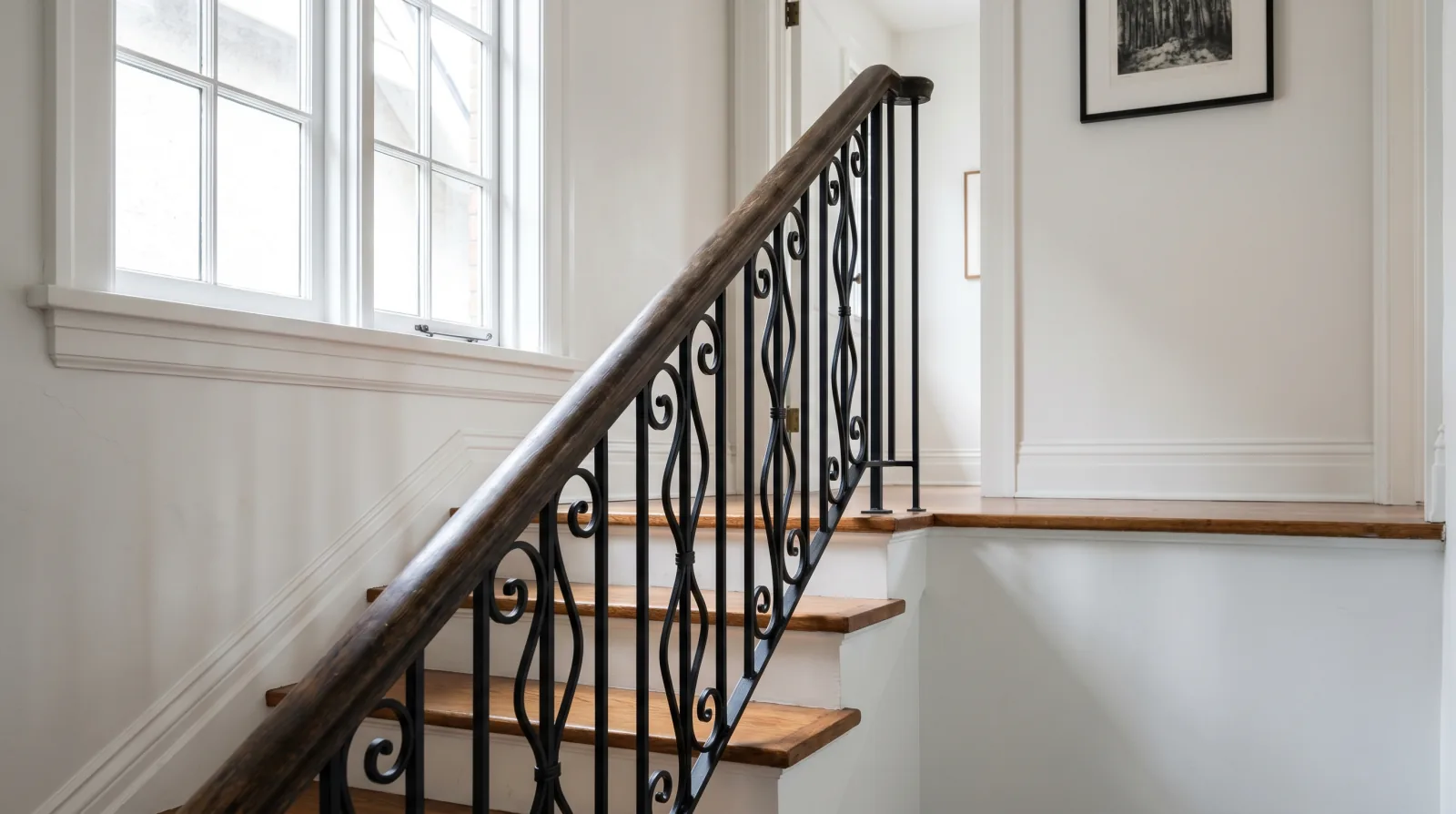
Interior stairs in homes that have period millwork, wainscoting, baseboards with backband profiles, fir floors, plaster ceilings, often benefit from an ornamental steel railing that reads as crafted and deliberate rather than minimalist. The dark metal against white-painted walls and warm wood treads is a combination that has worked in Vancouver heritage homes for over a century.
Ornamental steel also makes sense when the homeowner wants a handrail that matches an existing fence, a gate, or exterior guards elsewhere on the property. A powder-coated mild steel fence with scroll-top pickets reads oddly next to a cable railing on the front stoop.
When to choose something else
The ornamental steel style is not always the right answer, even on older properties.
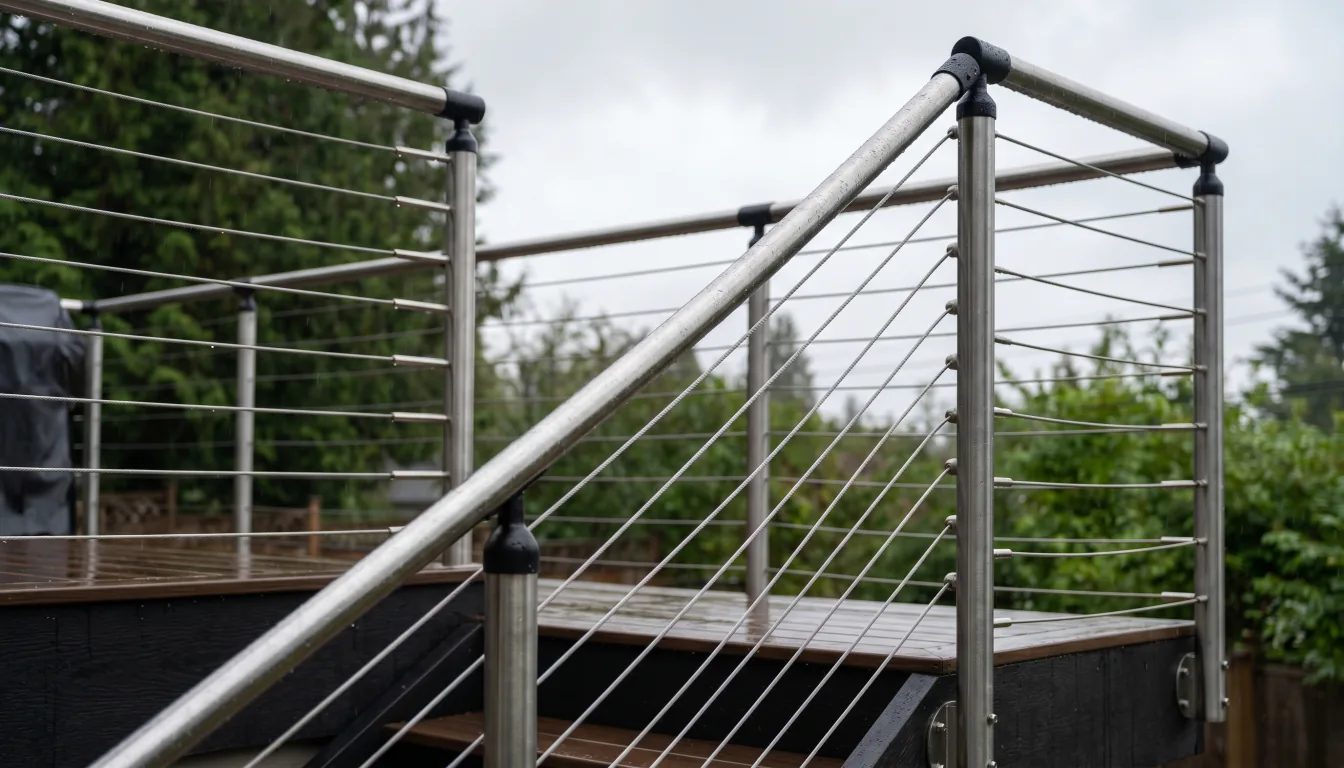
Cable railing is a better choice when the stair has a view worth preserving. A heritage home in Dunbar or the upper slopes of Shaughnessy often has a garden view or a neighbour’s large trees, open sightlines matter. Cable’s horizontal infill lines are less obtrusive than pickets or scrollwork. The cable posts and hardware can be powder-coated black to read quietly, and the system is well-suited to stairs where sight lines matter more than period authenticity.
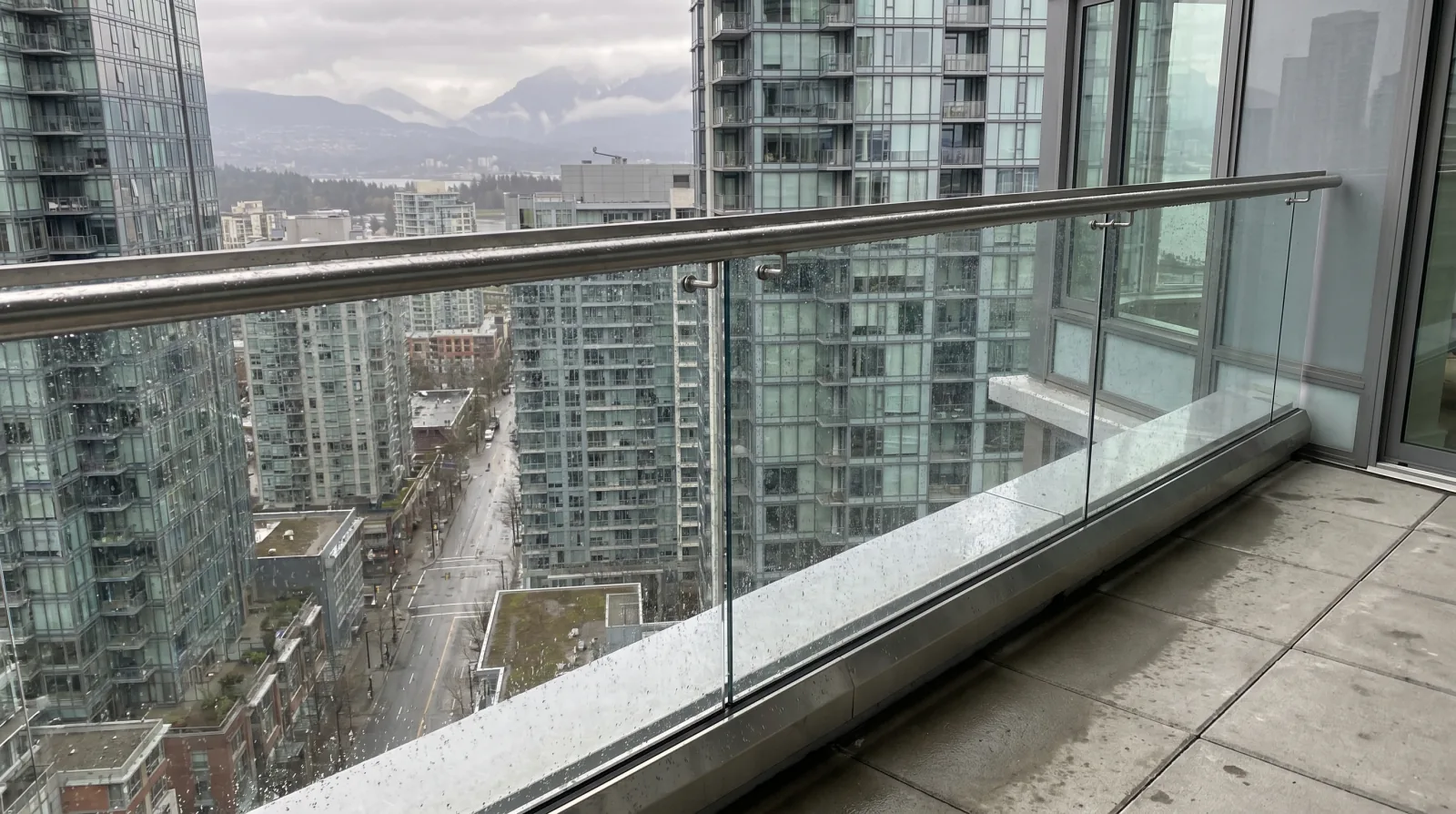
Glass railing, frameless or semi-frameless, is the right choice for modern renovations inside heritage envelopes. Many older homes in Kerrisdale and Shaughnessy have been gut-renovated, with open-plan interiors, concrete countertops, and clean-lined kitchens. In those interiors, an ornamental steel railing fights the new finishes. A glass guard with a flat steel or stainless top rail reads with the renovation.
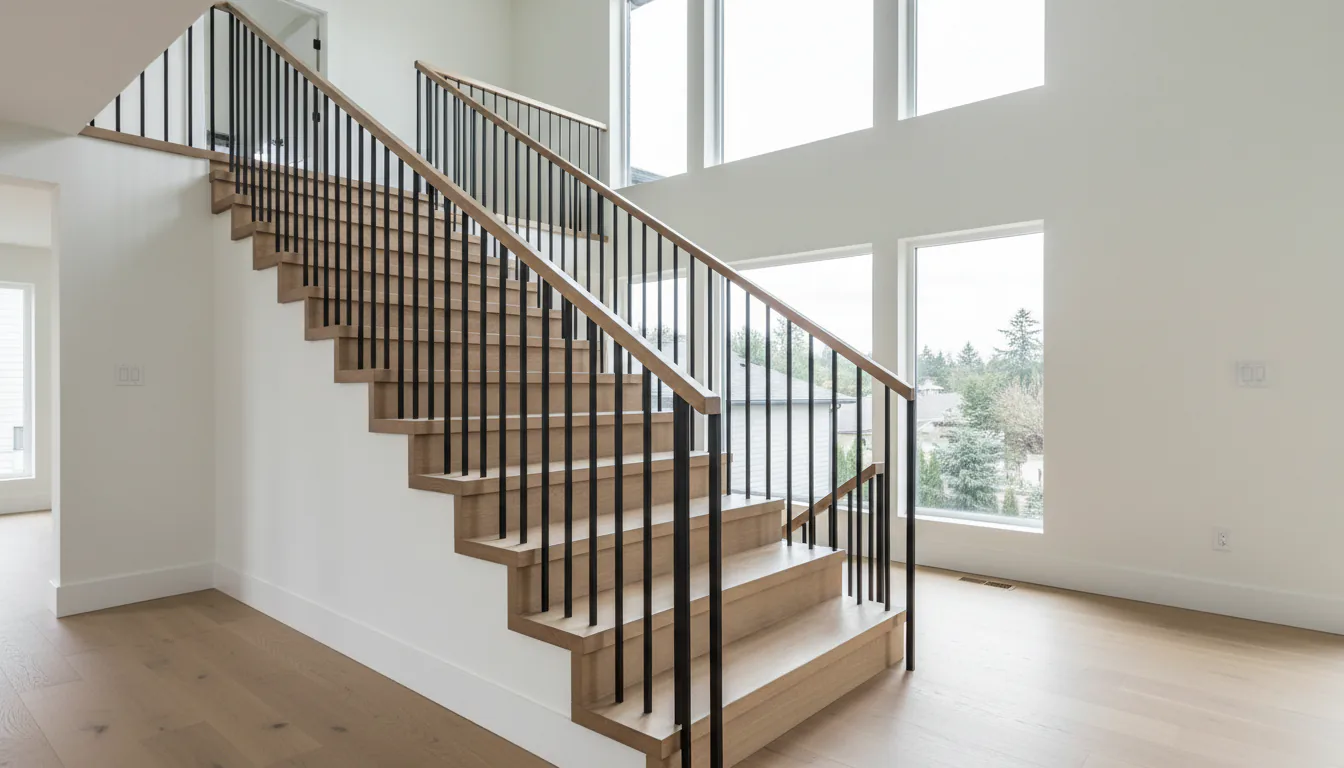
Powder-coated square picket railing, without the scroll work, is the maintenance-efficient version of the traditional look. No decorative elements means fewer surfaces where paint can chip and rust can begin. If the goal is a dark vertical railing that reads traditional without the detailing, plain square pickets are a practical choice that holds up better over time than ornate scrollwork on an exposed exterior.
Maintenance and finish longevity
The long-term performance of ornamental steel railing depends almost entirely on the finish system applied and the degree of exposure.
A two-coat powder coat system, primer and top coat, applied over sandblasted or chemically cleaned steel, on an interior or covered exterior application, typically holds well for many years before showing wear. Touch-up at welds and cut ends is the most common early failure point, because coating adhesion at those areas is lower and the exposed steel oxidises first.
On exposed exterior applications in Metro Vancouver, the rain and coastal humidity accelerate that process. A railing on a fully open front stoop in Point Grey or Strathcona that was painted rather than powder-coated, and without a proper primer system, can show rust at welds within a few seasons. The failure is not the steel; it is the coating system. Repainting an ornamental steel railing with a brush-applied paint without stripping to bare metal and repriming typically adds at most a couple of years before the rust returns underneath.
The correct approach for exterior ornamental steel in Metro Vancouver is a zinc-rich primer or epoxy primer followed by a urethane or powder top coat. For maximum longevity on fully exposed railings, open decks, side-yard stairs, gate posts, hot-dip galvanizing the fabricated steel before any decorative coating is the standard that holds up in coastal BC conditions. The American Galvanizers Association publishes guidance on corrosion performance of galvanized steel in various environments if a more detailed review is needed.
BC Building Code requirements for guards and handrails
Any ornamental railing replacement that functions as a guard must meet the structural and dimensional requirements of the BC Building Code Division B, Sections 9.8.7 and 9.8.8, which address handrails and guards for residential occupancies.
The distinction between a handrail and a guard is important in ornamental railing work. A handrail is a gripping surface alongside a stair, it provides support but is not required to resist the lateral loads of a barrier. A guard is a barrier at an open edge where there is a drop, it must resist specified loads and meet minimum height requirements.
Many ornamental railings serve both functions at once, which affects how the base connection must be detailed. A guard on the open side of a stair must be attached to something that can resist a horizontal point load. A decorative scroll top rail welded to a bottom rail that is simply screwed into a wood tread does not meet that requirement. The connection has to be engineered or comply with a prescriptive detail that the building department accepts.
Guard height minimums for residential applications, attachment details, and opening requirements for picket spacing are all addressed in those code sections. This post is not a substitute for code review by the authority having jurisdiction, an architect, or a licensed professional engineer. Where the scope involves a new opening, a new structural attachment, or a change to the stair configuration, an engineer of record is worth engaging before fabrication starts.
Ornamental railings alongside stair fabrication
Ornamental steel railing is often part of a larger scope: a stair replacement or new stair installation in Vancouver where the guard and handrail need to match the character of the house. Fabricating the railing alongside the stair, rather than sourcing them separately, keeps the connection details, the finish system, and the install sequence coordinated.
Exterior ornamental guards on older Vancouver properties sometimes require maintenance work on the stair structure itself before new railing can be attached soundly. Existing wood stringers, concrete stoops, or steel posts that have corroded at the base may not provide a sound connection point for a replacement guard, and that condition needs to be assessed before ordering steel.
If the question is whether to powder coat or use a wet paint system on an ornamental railing, the choice depends on exposure and access to a powder coat facility. Interior ornamental steel almost always benefits from powder coat over brush-applied paint, because the uniform film thickness and bake cure produce better adhesion at scroll welds and tight corners. Exterior ornamental steel needs a corrosion-resistant primer regardless of the topcoat type.
For homeowners who are replacing an old stair railing entirely, not just repainting, a banister replacement project in Vancouver often starts with a site measurement and a conversation about the existing attachment points, the guard height, and whether the original railing was compliant with current code.
Getting a quote for ornamental steel railing
The information that produces an accurate first quote: the linear footage of railing needed, clear photos of the existing railing or a sketch of the desired picket pattern, the stair height and opening details, the site address (for permit jurisdiction), whether the application is interior or exterior, and the target finish colour. Scroll profiles or specific pattern references help the fabricator estimate forming time.
Vancouver Stairs fabricates ornamental steel railings alongside stair projects and as standalone railing scopes. Send drawings, photos, and dimensions, even rough information helps separate a simple picket replacement from a decorative scroll scope that requires more labour and lead time.
Sources
Related questions
Is wrought iron railing still available in Vancouver?
True wrought iron, the fibrous, slag-containing material hand-worked in a forge, is rarely fabricated today. When homeowners ask for wrought iron, fabricators supply ornamental mild steel shaped to match traditional profiles. The look is the same. The material is not.
What does ornamental steel railing cost per linear foot in Metro Vancouver?
Installed cost depends heavily on the complexity of the scroll or picket work, the finish system, and site access. Simple straight pickets run at the lower end of the range; decorative hand-formed scrolls and collars at the higher end. Get a quote once drawings or photos of the existing railing are available.
Does ornamental steel railing need engineering?
It depends on whether the railing functions as a guard or only as a handrail. A guard, required where there is a drop of 600 mm or more, must meet structural loading requirements under the BC Building Code. Replacing a guard in kind on a residential stair may not need an engineer of record, but a new opening or a change to the attachment system often does. Confirm with the authority having jurisdiction before starting work.
How long does powder coat last on ornamental steel in Vancouver?
A properly applied two-coat powder coat system on ornamental steel, zinc phosphate primer followed by a top coat, typically holds 8 to 15 years on interior applications before showing wear. On exterior railings exposed to Vancouver's rain and UV, the same system may show degradation in 5 to 8 years without a primer coat underneath. Bare paint without primer can fail in 3 to 5 years in exposed conditions.
What is the difference between a handrail and a guard?
A handrail provides a gripping surface along a stair. A guard is a barrier that prevents falls where there is a significant drop, at the open side of a stair, a landing, or a deck. The BC Building Code specifies different height requirements and structural loading requirements for each. Many ornamental railings serve as both simultaneously, which affects how the connection to the stair must be detailed.
Can I replace only part of an ornamental steel railing?
Sometimes. If the existing railing uses a standard picket profile, a fabricator can match it reasonably well in mild steel. If the original railing has hand-formed scrollwork, matching it exactly requires the same work, plasma-cut or hand-bent elements that match the original pattern. The cost of matching a complex original is often close to the cost of replacing the whole run.
Is cable railing cheaper than ornamental steel?
Not usually. Cable railing requires engineered posts that handle horizontal tension loads, and those posts must anchor into something structural. For a simple residential guard run, ornamental steel pickets are often less expensive than cable. Cable offers a different look, open sightlines, not a cost saving.
Can ornamental steel railing be used outdoors in Vancouver?
Yes, but the finish system has to match the exposure. Interior or covered exterior applications can use standard powder coat with a primer. Fully exposed exterior railings, front stoops, side-yard stairs, open decks, need a corrosion-resistant primer system underneath the topcoat, or hot-dip galvanizing for the steel before any decorative coating. Without it, rust will appear at welds and cut edges within a few seasons.
Do ornamental railings require a building permit in Vancouver?
A like-for-like repair of an existing railing typically does not require a permit. Replacing the full guard system, changing the attachment, or altering the stair opening usually does. The City of Vancouver and other Metro Vancouver municipalities tie permit requirements to scope of work and the assessed construction value. Check with the relevant building department before starting.
What BC Building Code sections apply to stair railings?
Section 9.8.7 and Section 9.8.8 of the BC Building Code address handrail and guard requirements for residential occupancies, including height, graspability, and structural loading. This post is not a substitute for code review by the authority having jurisdiction, an architect, or a licensed engineer.