Concrete-Filled Pan Stair Treads: Where They Make Sense in Vancouver
How pan treads are built, why they are quieter and heavier than grating or plate, and the drainage and corrosion questions that decide indoor versus outdoor use.
A pan tread is a steel tray waiting for concrete. That sounds simple until you ask who pours it, when, and what happens to water that gets in.
A concrete-filled pan tread is a steel tray that arrives empty and becomes a stair once somebody fills it. Most of the problems with pan stairs trace back to that sentence, and specifically to the word “somebody”.
The pan is fabricated, the surface is placed on site
A pan tread is a formed steel tray, open at the top with a turned-down nosing edge and turned-up back and sides, welded into the stringers as part of the stair assembly.
The tray does the structural work and sets the geometry. The fill, usually concrete or a cementitious levelling product, forms the walking surface. The two are designed together, because the pan depth determines the fill thickness and the finished top of the fill is what the rise calculation is measured to. Get the fill thickness wrong and every riser in the flight shifts.
That relationship is worth stating plainly because it explains the most common pan stair defect. A stair fabricated for one fill depth and filled to another produces treads that sit high or low, and since the fill is placed on site by a different trade, the two decisions are made by different people. The rise uniformity tolerances are tight enough that this is not a theoretical concern.
Who fills the pans is a contract question
This is the single most useful thing to settle before a pan stair is ordered.
In most cases the fill is placed by the concrete contractor or the general contractor, not by the stair fabricator. The fabricator supplies a stair with empty pans, and that stair is not walkable as a finished surface until somebody else does the next step. Where that scope split is not written down, it becomes a dispute at exactly the moment the schedule is tightest.
The related question is when. Pans are usually filled after the stair is installed, because a filled stair is substantially heavier to lift and more likely to be damaged in handling. That means there is a window where the stair is in place, in use as construction access, and not yet finished, which has its own implications for protection and for site safety.
In our shop, the pan stairs that go smoothly are the ones where the tender documents name the filling trade explicitly. It costs one sentence.
Weight changes the lift and the structure
An empty pan stair is comparable in weight to other steel stairs. A filled one is not.
Concrete is heavy, and a flight of treads each carrying a fill adds up quickly. That weight lands on the stringers, on the connections, and eventually on the building structure, which is why the fill is part of the structural design rather than a finish applied afterwards. It also affects the floor loading the stair imposes, which matters on a renovation where the supporting structure is existing.
For installation, the practical consequence is that the stair goes in empty. Lifting a filled flight is a different crane conversation from lifting an empty one, and on a tight site the difference can decide the method. The considerations in crane versus manual installation apply, with the useful note that a pan stair gives you the choice to move weight from the lift into a later pour.
Sound is the reason pan treads appear in residential buildings
Steel rings. A bare plate tread or an open grating tread transmits footfall as a bright, carrying sound, and inside a stair shaft that sound travels between floors.
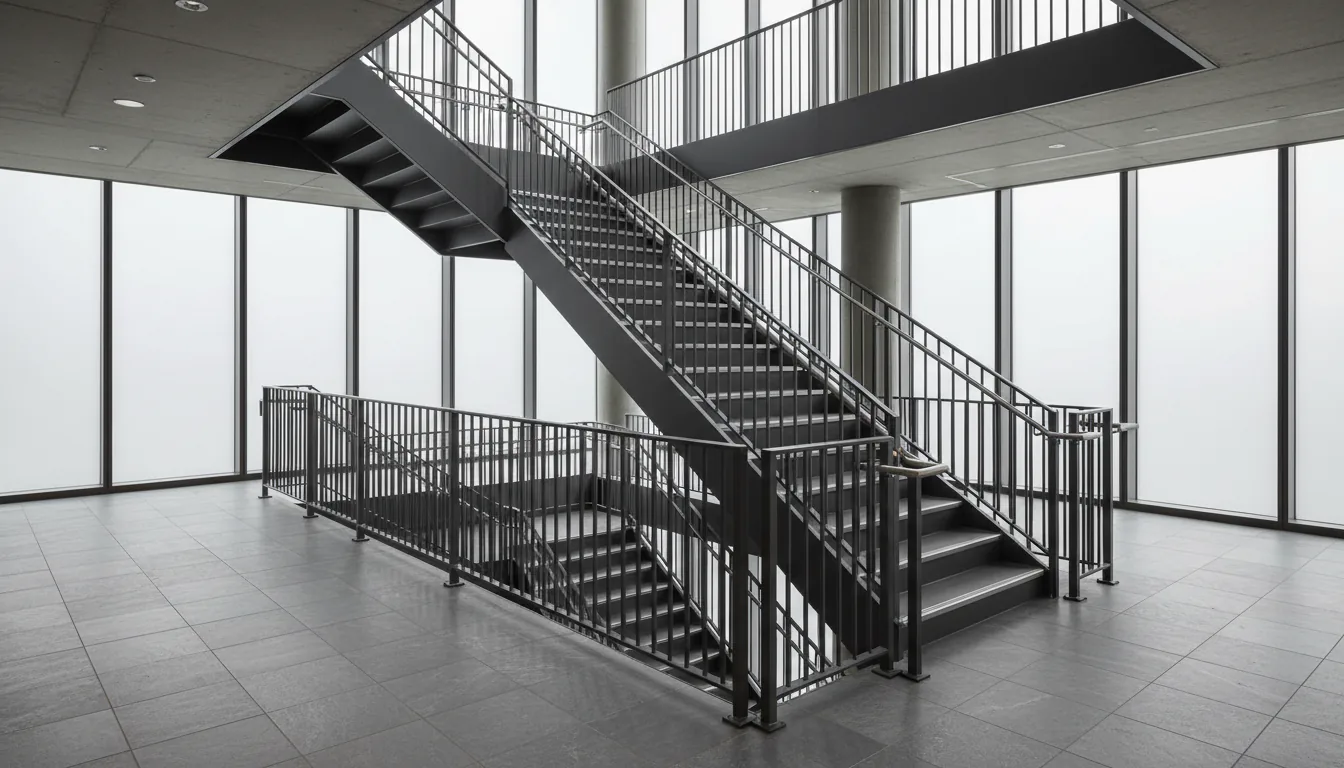
Mass damps it. A filled pan tread is meaningfully quieter underfoot than an unfilled steel tread, which is why filled pans dominate the exit stairs of apartment buildings, hotels, and offices where people live or work next to the shaft.
It is one input rather than a complete answer. The connections, the shaft construction, and whether the stair touches the demising wall all matter as well, and a filled stair rigidly bolted to a party wall can still transmit impact noise structurally. The broader picture is covered in the notes on stair acoustics in multifamily buildings.
Outdoors, the tray becomes a container
The property that makes a pan tread good indoors works against it outside.
A pan is a tray with turned-up edges. Outdoors, that shape collects water unless the fill and the detailing actively shed it. Water that sits at the back corner of a pan, or that finds its way under a cracked fill, sits against steel in a wet coastal climate and does not leave.
The failure pattern is predictable and it is hidden. Corrosion starts inside the pan, under the fill, where nobody looks. By the time a stain appears at the nosing or the fill starts to lift, the tray underneath has usually been rusting for some time. Patching the surface at that point treats the symptom.
That is why bar grating and perforated treads are so common on exterior stairs in Metro Vancouver: they simply do not hold water. Where a pan tread is wanted outdoors for acoustic or appearance reasons, the steel needs a finish specified for the exposure, and the fill needs to be detailed to drain. The finish choices are covered in exterior steel stairs and coastal finish and hot-dip galvanizing for exterior stairs.
Nosings and surface requirements are fabricated in, not added on
A pan tread gives a continuous surface, which makes several finish requirements easier than they would be on grating.
Nosings can be formed as part of the pan itself, giving a integral steel edge, or a separate nosing product can be set into the fill. Contrast strips and slip-resistant inserts can be bedded into the fill while it is placed. Tactile indicators at a landing have something solid to sit on or be recessed into.
All of those are easier when decided before fabrication. An integral nosing is pressed into the pan at the shop. A set-in nosing needs the fill depth to accommodate it. A recessed contrast strip needs the recess to exist. The nosing profile options and the anti-slip finish choices are worth reviewing alongside the tread type rather than after it.
Comparing pan treads to the alternatives
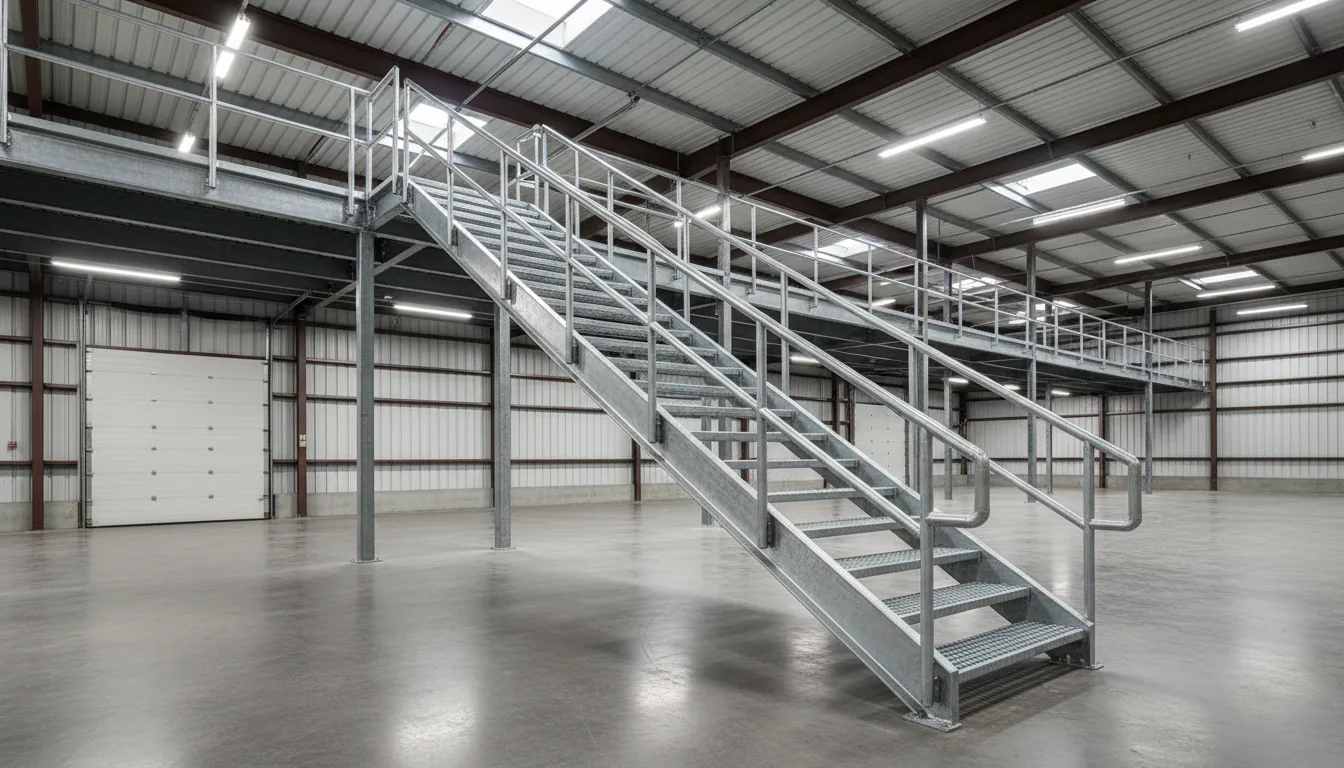
Against bar grating, pan treads are quieter, present a solid surface, cost more once the fill is included, and are heavier. Grating drains, weighs less, and reads as industrial. Where a stair is exposed to weather or serves a warehouse, grating usually wins. The comparison is set out further in bar grating stair treads.
Against solid plate treads, pan treads are quieter and give a non-metallic walking surface, at the cost of a second trade and a second operation. Plate is a single finished product delivered complete, which is simpler on a small project.
Against timber treads on a steel frame, pan treads are the commercial answer and timber is the residential one. Timber brings warmth and a wider range of appearance; it also brings wear, refinishing, and moisture sensitivity that a commercial exit stair does not want. The full breakdown of tread and finish options across every stair type is in our materials guide.
Protecting the pans between install and fill
There is a window on every pan stair project that nobody plans for, and it is where most of the damage happens.
The stair is installed empty. It then serves as construction access, sometimes for weeks, while other trades move materials up and down it. During that period the pans are open steel trays, and they collect exactly what you would expect: offcuts, screws, drywall dust, spilled compound, and rainwater if the building is not closed in.
None of that is harmless. Debris left in a pan gets buried by the fill rather than removed, which creates a void or a contaminated bond at the bottom of the tray. Water sitting in an uncoated pan starts corroding it before the stair is even finished. Drywall compound and similar residues interfere with the fill bonding to the steel.
The remedy is ordinary site management: cover the pans, or clean them out immediately before filling rather than assuming they are clean. Temporary protection over the treads also stops the nosing edges from being chipped by traffic, which matters because the nosing is the most visible edge on the finished stair.
Where the building is not weather-tight, the sequencing question is worth raising directly. Filling pans in a structure still open to rain, or in freezing conditions, brings its own problems that belong to the concrete trade rather than to the fabricator. Agreeing when the fill happens, relative to enclosure, is part of the same conversation as agreeing who does it. The general approach to protecting finished work is covered in metal stair installation day.
What to settle before ordering
Pan stairs are straightforward when four things are agreed, and troublesome when they are not.
Agree the fill type and depth, so the pan is fabricated to match and the risers land correctly. Agree who places the fill and when, in writing. Agree the nosing and any contrast or slip requirement, so integral features are formed at the shop. And agree the steel finish against the actual exposure, particularly if any part of the stair sees weather. Send the stair geometry, floor-to-floor dimensions, and the specification covering those four items, and the stair can be drawn once.
The pan stair that causes trouble is almost never the one with a fabrication defect. It is the one that arrived on site with empty trays and no agreement about whose job the next step was.
Related questions
What is a concrete-filled pan tread?
It is a formed steel tray, open at the top, welded into the stringers as part of the stair. Concrete or a cementitious fill is placed into the tray on site to form the finished walking surface. The steel provides the shape and the structure, and the fill provides the surface.
Who pours the concrete, the fabricator or the concrete contractor?
Usually the concrete or general contractor on site, not the stair fabricator. That split is worth confirming in writing at tender, because a pan stair delivered with empty pans is not a finished stair and the fill is a separate trade, a separate cost, and a separate schedule item.
Why choose pan treads over bar grating?
Pan treads are quieter underfoot, present a solid surface rather than an open one, and read as finished rather than industrial. Grating is lighter, drains freely, and costs less. In most of the projects we see, the choice follows whether the stair is inside a finished building or exposed to weather.
Can pan treads be used outdoors?
They can and often are, but drainage becomes the governing question. A tray that holds water against steel is a corrosion problem, so exterior pan stairs need the fill detailed to shed water and the steel protected accordingly. Grating is frequently the easier answer outdoors.
Are pan treads heavier than other tread types?
Yes, noticeably, once filled. The added weight affects the stringer sizing, the connections, and how the stair is lifted into place. A pan stair is usually installed empty and filled afterwards partly for that reason.
Do pan treads help with noise?
They do compared with grating or bare plate. The mass of the fill damps the ringing that an unfilled steel tread produces, which matters in multi-unit residential and office buildings where a stair shaft carries sound between floors. It is one input among several rather than a complete solution.
What thickness of fill goes into the pan?
The pan depth is designed for a specific fill thickness, and the two are chosen together with the tread geometry so the finished surface lands where the rise calculation expects. Confirm the specified depth with the engineer and the fabricator rather than assuming a standard, because the pan is fabricated to it.
Can a nosing be added to a pan tread?
Yes. A formed steel nosing can be part of the pan itself, or a separate nosing product can be set into the fill. Where the project needs a contrasting or slip-resistant nosing, deciding which approach applies before fabrication matters, since an integral nosing is formed into the pan.
How do pan treads handle tactile indicators and contrast strips?
Reasonably well, because there is a continuous surface to work with. A cementitious fill can receive a set-in product or a surface-applied one, which is easier than the equivalent detail on open grating. The setting-out still has to be known before the pans are placed.
What goes wrong with pan treads over time?
The common failure is corrosion starting where water sits, usually at the back corner of the pan or where the fill has cracked and lets moisture reach the steel underneath. Once the tray is rusting from the inside, patching the surface does not solve it.
Are filled pan stairs more expensive?
The steel is comparable to other tread types, but the total installed cost includes the fill as a separate scope. Whether that lands higher or lower than grating depends on the project and the trades involved. Confirm against a current quote rather than assuming.
What should I send a fabricator to price a pan stair?
Send the stair geometry and floor-to-floor dimensions, the specified fill type and depth, who is responsible for placing the fill, the nosing requirement, the finish for the steel, and whether the stair is interior or exposed. The fill responsibility is the item most often unstated and most often disputed later.